
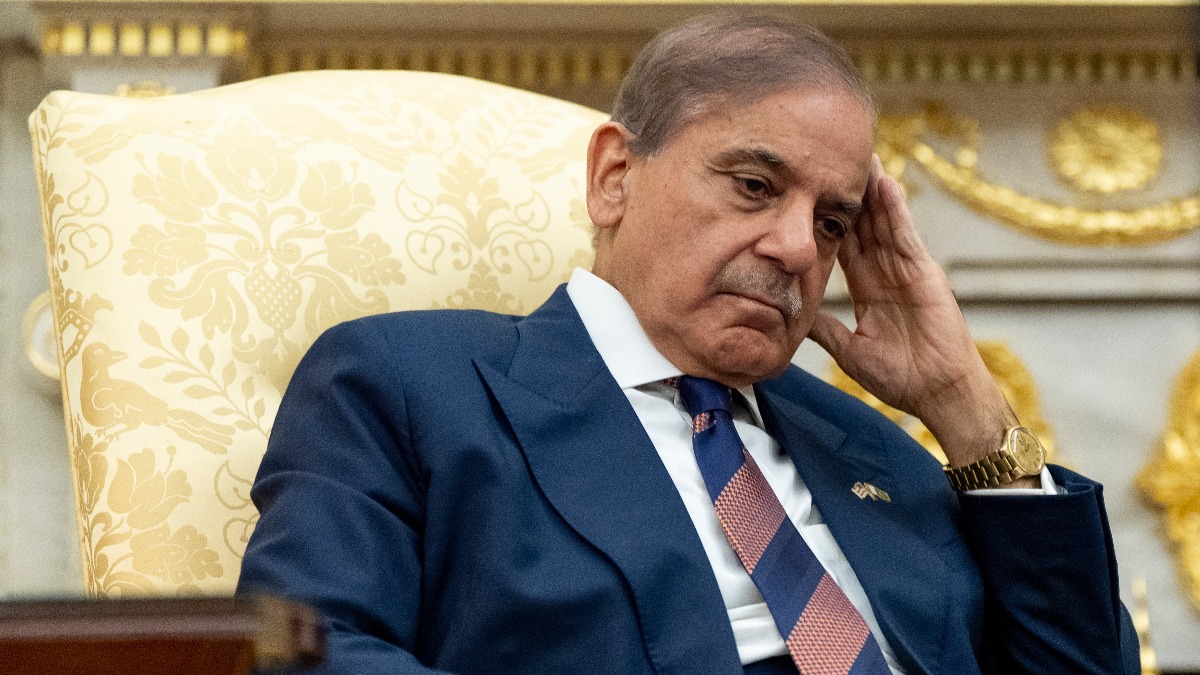
Prime Minister Shehbaz Sharif on Tuesday called for renewed
global commitment to sustainable and inclusive development, terming it the only viable
pathway to durable peace and shared prosperity in a world facing intertwined crises.
Addressing a special event on “Sustainable Development: Pathway for Global Peace and
Prosperity”, the prime minister said the world stood at a crossroads where geopolitical hostility,
climate stress and technological disruption were converging into a single destabilizing force.
“The defining danger of our time is not any single threat, but the combination of many,” he
said, warning that poverty, debt distress, mass displacement and unresolved political conflicts
were intensifying global instability.
The prime minister emphasized that sustainable development must be inclusive and equitable,
leaving no one behind. “Development cannot be called sustainable if it excludes millions from
the promise of a better life,” he added.
Highlighting the disproportionate burden borne by developing countries, he said nations
contributing least to global emissions were paying the heaviest price in terms of climate
change, economic volatility and debt distress.
The prime minister said the country contributed less than one percent to global emissions but
remained among the most vulnerable to climate-induced disasters. He also recalled the
devastating floods of 2022 that claimed thousands of lives, destroyed crops and infrastructure,
and displaced millions, adding that subsequent floods had compounded the challenges.
“These disasters erode human security at its core,” he said, stressing that sustainable
development must be anchored in equity, justice and fair play.
Reaffirming Pakistan’s commitment to the Sustainable Development Goals (SDGs), the prime
minister said the government had integrated them into national development planning,
focusing on human development, education, healthcare, food security and social protection,
particularly for women and youth.
He noted that Pakistan’s large youth population presented both a challenge and an
opportunity, underscoring the need for investment in skills, digital transformation and
institutional strengthening to harness their potential.
The prime minister reiterated Pakistan’s consistent advocacy for dialogue, diplomacy and
multilateralism as the only viable means to resolve disputes and prevent conflict, despite facing
aggression and violations of international commitments.
He stressed the need to reinforce and reform the United Nations system to enable it to
effectively serve as a pillar of global peace and cooperation.
Highlighting Vienna’s unique role within the UN system, he said the city hosted key institutions
dealing with counter-terrorism, crime prevention, industrial development and the peaceful
uses of nuclear technology and outer space.
Pakistan, he said, greatly valued its constructive engagement with IAEA, UNIDO, UNODC and
other Vienna-based entities and remained committed to supporting their mandates.
He also underscored the importance of capacity building, knowledge sharing and technology
transfer to ensure that emerging technologies such as artificial intelligence and biotechnology
benefited all humanity rather than a privileged few.
“Unaddressed digital divides will soon become entrenched development divides,” he warned,
urging the international community to address root causes of global challenges instead of
merely managing their consequences.
Later, the prime minister attended a ceremony of signing of the United Nations Industrial
Development Organization (UNIDO) Programme for Country Partnership (PCP) Pakistan
2025–2030, the United Nations Office on Drugs and Crime (UNODC) Country Programme
Pakistan, and a cooperation agreement between the Institute of Nuclear Medicine and
Oncology Lahore (INMOL) and the International Atomic Energy Agency (IAEA).
Deputy Prime Minister and Foreign Minister Ishaq Dar, while addressing the event said Pakistan
remained steadfast in its commitment to the purposes and principles of the UN Charter,
recognizing the indispensable role of the United Nations in global peace, security, sustainable
development, and the promotion of human rights.
"The mandates of the UN organizations in Vienna are closely linked to the peace-development
nexus, and Pakistan takes pride in its constructive engagement with these pillars of global
governance," he added.
He said Pakistan deeply appreciated the role of the IAEA in promoting peaceful applications of
nuclear technology for global peace and development.
Further he said Pakistan was also committed to further strengthen its partnership with the UN
Office on Drugs and Crime for strengthening the rule of law and countering crimes that drain
development resources.
"As a driver of inclusive and sustainable industrialization, UNIDO is central to Pakistan's efforts
in poverty eradication, increasing sources of employment, and transitioning towards cleaner
and more resilient industries," he added.
Director General IAEA Rafael Mariano Grossi said he had visited different nuclear facilities in
Pakistan, including the last unit in construction, Chashma, which he said was quite impressive.
He also expressed the commitment to continue collaboration with Pakistan that will continue
and get stronger.
Deputy Director-General of UNIDO Yuko Yasunaga said despite contributing minimally to global
greenhouse gas emissions, Pakistan remained highly vulnerable to climate impacts. "The
devastating floods of 2022 stand as a stark reminder of the scale of this global challenge," he
added.
He pointed out that climate resilience and economic resilience were inseparable and the
development of low-carbon technologies and industries was essential to safeguarding
livelihoods, promoting growth and strengthening social cohesion.
Post a Comment