
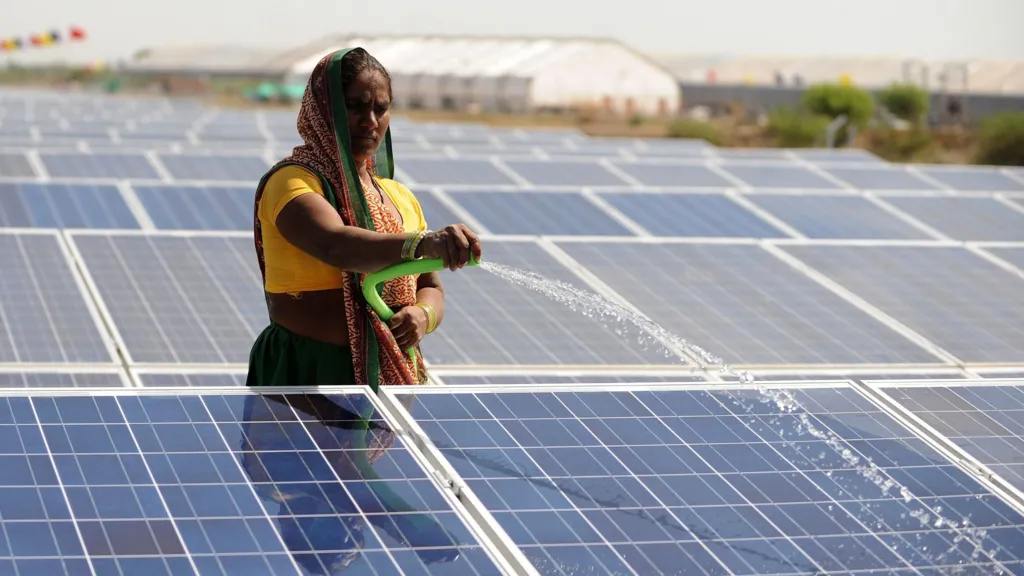
India's rapid solar energy expansion is widely hailed as a success. But without a plan to manage the waste it will generate, how clean is the transition?
In just over a decade, India has become the world's third-largest solar producer, with renewables now central to its climate strategy. Solar panels are everywhere - from vast solar parks to blue rooftops across cities, towns and villages.
Alongside large solar parks, millions of rooftop systems now feed power into the electricity grid. Government data show nearly 2.4 million households have adopted solar under a subsidy scheme.
Solar growth has cut India's reliance on coal. Though thermal and other non-renewables still supply over half of installed capacity, solar now contributes more than 20%. Yet the achievement carries a challenge: while clean in use, solar panels can pose environmental risks if not properly managed.
Solar panels are mostly recyclable, made of glass, aluminium, silver, and polymers - but trace toxic metals like lead and cadmium can pollute soil and water if mishandled.
Solar panels typically last about 25 years, after which they are removed and discarded. India currently has no dedicated budget for solar-waste recycling and only a few small facilities to process old panels.
Post a Comment